Parvati Valley, Himachal Pradesh ·
Sar Pass on camera: snow, weather and batteries
A five-day trek in the Parvati Valley that ends with a slide down the snow. Notes on filming it well.
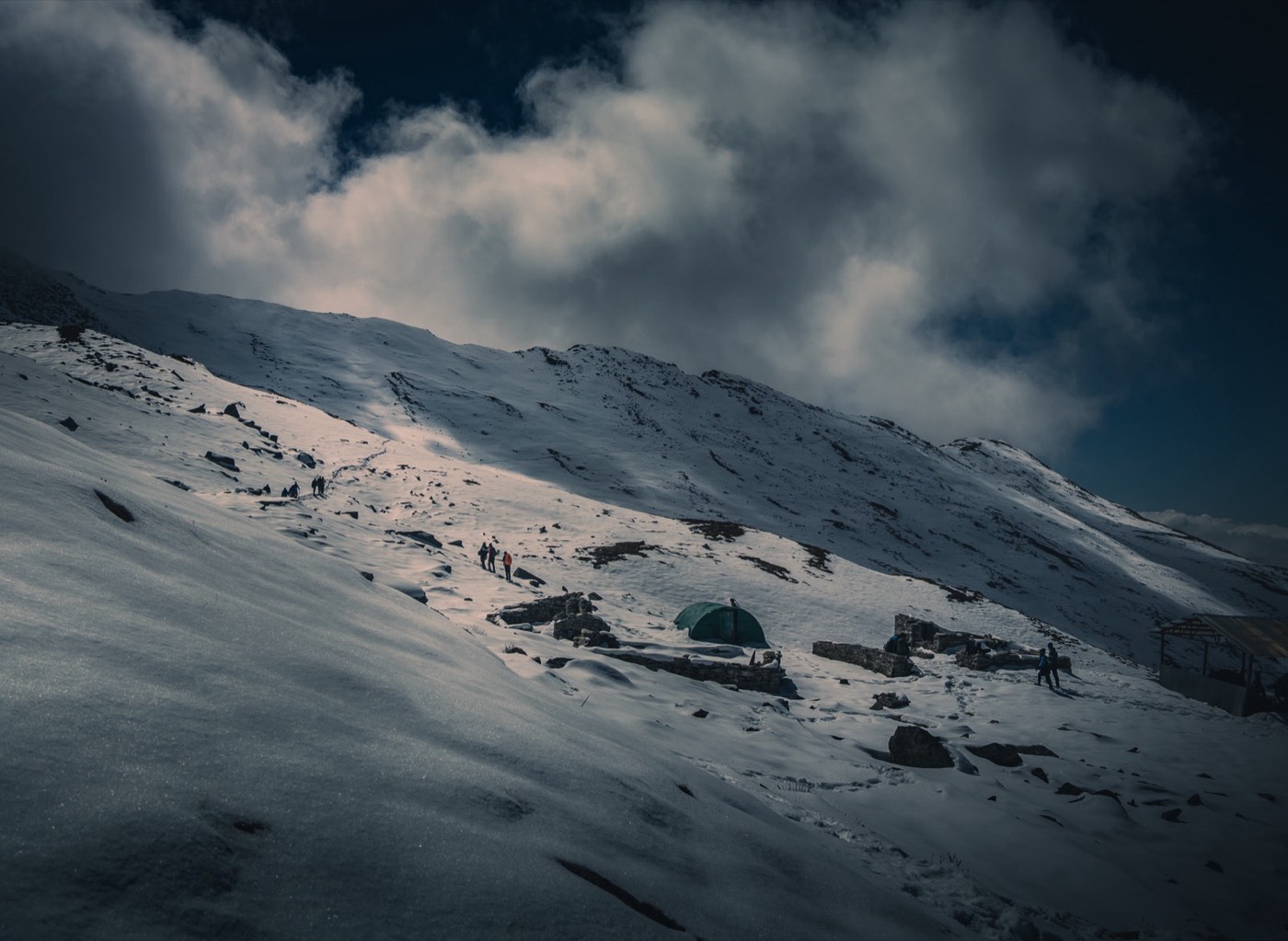
Sar Pass is one of the best-known treks in Himachal Pradesh. It starts near Kasol in the Parvati Valley, climbs through forest and alpine meadows to a pass of roughly 4,200 metres, and is famous for its descent, where trekkers slide down long snow slopes on the way to the next camp. We filmed it for Hello Hikers, and it is a very different shoot from a dry-trail trek.
The season
Sar Pass is usually trekked from around May into early summer, when there is still plenty of snow on the upper sections. That snow is what makes the trek, and it is what makes the film. Later in the year there is less of it and the character of the route changes. Weather in the mountains can turn quickly at any time, so treat every forecast as a guess and plan for a lost day.
The snow is the story, so go while it is there
Filming in snow
Snow fools camera meters. A bright snowfield will push automatic exposure too dark, so expose manually or dial in compensation, and check your histogram rather than the screen, which is hard to read in glare. Polarisers help with the sky and with glare off the snow, but watch for uneven skies on wide lenses.
Glare is hard on people as well as cameras. Everyone on the crew needs proper sunglasses, and sunscreen matters more on snow than anywhere else, because the light comes from below as well as above.
The slide
The snow slide is the moment everybody remembers, and it is over in seconds. Agree the plan with the trek leaders before the day: where people will slide, where you can stand safely, and in what order. A camera at the bottom looking up, one following from the side, and a drone overhead if conditions allow will usually give you everything you need in one pass. Never put a camera operator in the path of the slide.
Batteries and cold
The upper camps are cold, especially overnight. Battery life drops sharply in low temperatures, and there is little or no power on the trail. Carry more batteries and power banks than seems reasonable, keep them warm inside your sleeping bag at night, and plan your shooting so the most important days get the freshest batteries.
Keep it light
Every kilogram goes up the mountain. A small mirrorless kit, a couple of versatile lenses and a light drone cover the trek well. Waterproof bags for everything are essential, because snow melts on warm kit and the weather can bring rain or sleet without warning.
If you are planning to film Sar Pass or another snow trek in the Himalaya, tell us your dates and what the film is for, and we will help you plan around the snow and the weather.