Hampta Pass, Himachal Pradesh ·
Filming the Hampta Pass trek
Green on one side of the pass, desert on the other. A practical guide to shooting the crossing from Kullu into Lahaul.
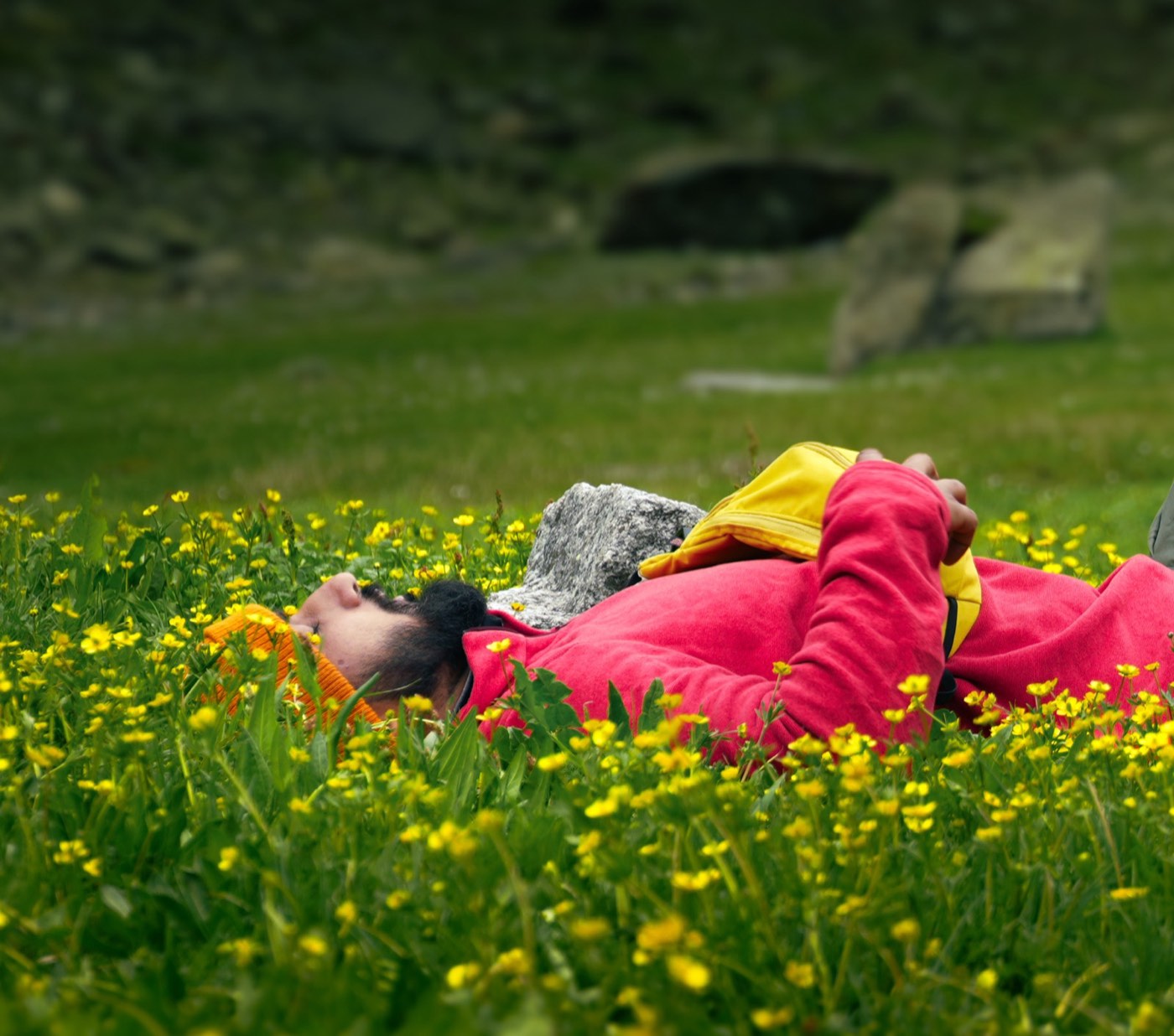
Hampta Pass is one of the few treks in India where the landscape changes completely in a single day. You climb out of the forested Kullu valley above Manali, cross a pass at roughly 4,270 metres, and come down into the bare, high desert of Lahaul. For a film crew that contrast is the whole story, and it is also the whole problem: two climates, two kinds of light and very little time to move between them.
We filmed the crossing for Hello Hikers, a trekking company that runs it every season, and this is what we would tell any crew planning the same.
When to go
The trekking season usually runs from around mid-June to late September. Early in the season the upper camps still carry a lot of snow, which looks spectacular but slows everyone down and makes river crossings colder and harder. July and August bring the monsoon to the Kullu side: the meadows are at their greenest, but expect rain, cloud and soft, low-contrast light for days at a time. September is generally the clearest month, with sharper light and more stable weather, though the flowers have mostly gone.
Monsoon greens or September clarity: pick one
Decide early which film you are making. If the brief is lush and green, accept the rain and plan rain covers for everything. If the brief is big skies and clean horizons, aim for September.
The route, as a shooting schedule
Most groups take four to five days. The trail usually begins near Jobra, a short drive from Manali, and climbs through camps such as Chika, Balu ka Ghera and Shea Goru before the crossing, then descends to Chatru in Lahaul. Each camp has a different character: forest and river low down, open meadows and boulder fields in the middle, snow and scree near the top. Build the shot list around the camps rather than around the days, because the weather will move the days.
The pass itself is usually crossed early in the morning, when the snow is firmer and the weather more settled. That means the most important location of the trek is often shot in flat early light, in a hurry, with a tired group. Scout the crossing the evening before if you can, agree two or three set-ups in advance, and do not expect a second take.
Kit that earns its weight
Everything goes up on your back or on a mule, so be ruthless. A mirrorless body or two, a small set of lenses and a lightweight drone cover nearly everything this trek asks for. We shot on Sony mirrorless bodies with G Master glass, and a sub-250 g drone for the wide establishing shots, which keeps the paperwork and the weight down.
Cold is the real enemy of the kit, not altitude. Batteries lose charge quickly in the high camps, so carry more than you think you need, keep spares inside your jacket and charge whenever there is power at the lower camps. A small power bank for each crew member is worth more than one large one.
Working with the trekkers
On a trek film the trekkers are your cast, and they did not come to be filmed. Keep the crew small, shoot as they walk rather than asking them to repeat things, and save any set-ups for camp, when people are resting anyway. The most honest moments on our shoot came at the end of the day, not on the trail.
If you are planning a shoot on Hampta Pass or anywhere in the Himachal Himalaya, write to us with your dates and the kind of film you need. We will tell you honestly what the season will give you.