Uttarakhand and Himachal Pradesh ·
Drone filming in the Himalaya
Thin air, strong winds and airspace rules that change by the valley. How to fly safely and legally in the mountains.
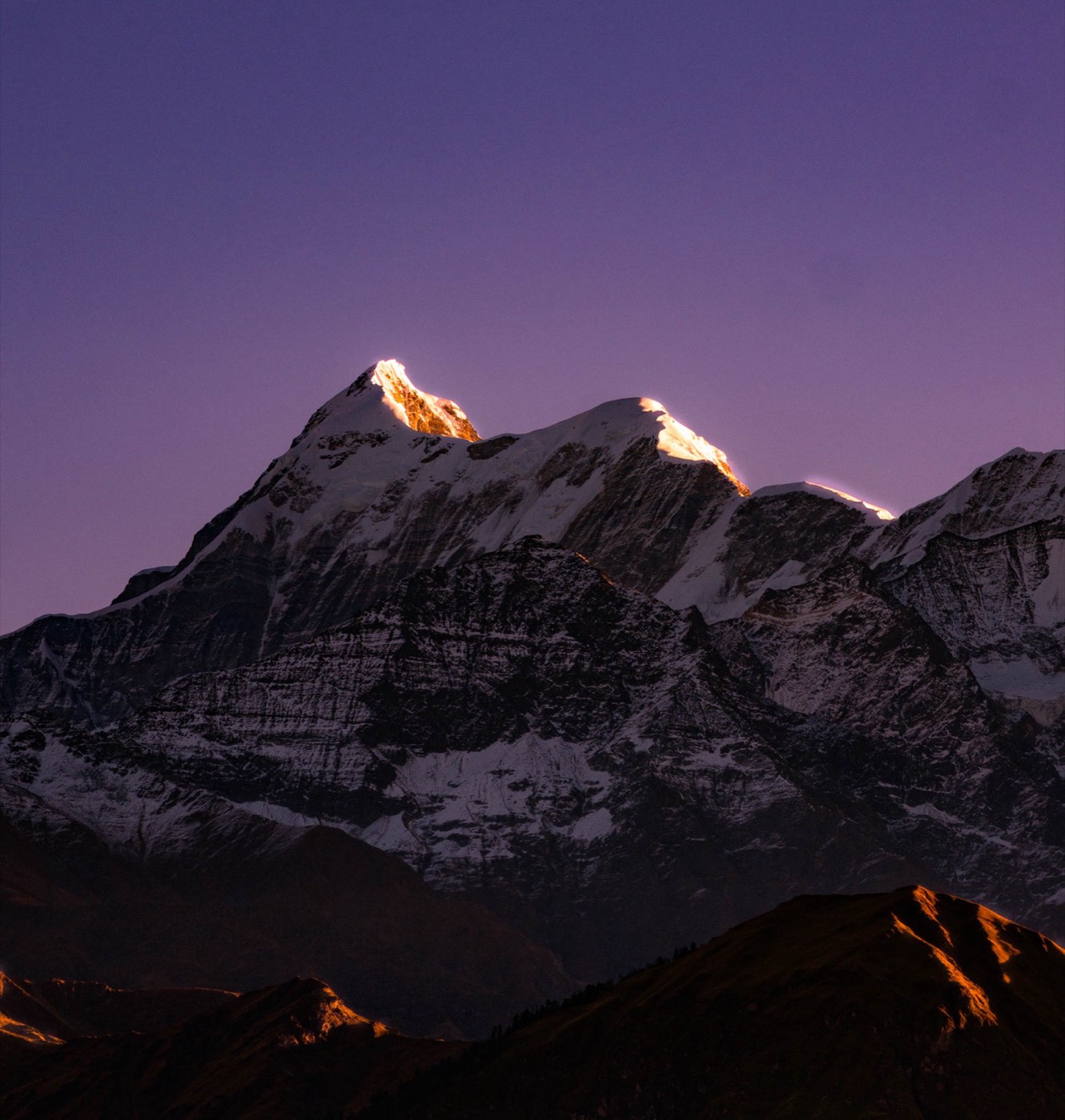
A drone can do in one shot what used to take a helicopter and a week of planning: show the scale of a valley, follow a trail across a ridge, or lift slowly off a campsite to reveal the peaks behind it. In the Himalaya it can also be lost in a single gust. Flying well in the mountains is mostly about preparation, and that starts long before the drone leaves the bag.
Know the rules first
Drones in India are governed by the Drone Rules, 2021, and managed through the government’s Digital Sky platform. Requirements depend on the drone’s weight class and on how you are using it, and they are updated from time to time, so check the current rules on Digital Sky before every shoot rather than relying on memory.
Weight class matters. A drone under 250 grams, such as the DJI Mini 3 Pro, sits in the lightest category, which generally comes with the fewest requirements. Heavier drones such as the DJI Air 3S fall into a higher class and carry more obligations. For commercial work, plan for registration and certification requirements and build the time into your schedule.
Check the airspace map before every flight
Airspace zones
Digital Sky publishes an airspace map that divides the country into green, yellow and red zones. Green zones generally allow flying within the rules; yellow zones need permission; red zones are off limits without special clearance. Large parts of the Himalaya are near borders, airports or defence areas, and some of the most beautiful locations fall in restricted zones. Check every location on the map during planning, not on the day.
Altitude and thin air
At high altitude the air is thinner, so propellers produce less lift. A drone works harder to stay in the air, batteries drain faster and climb rates fall. Expect noticeably shorter flights than at sea level, land with a healthy reserve, and take the first flight of the day slowly to see how the drone is handling.
Wind and terrain
Mountain wind is unpredictable. It can be calm in camp and blowing hard fifty metres up, and passes and ridgelines funnel it. Fly with the wind in mind: go out into the wind so the drone comes home with it behind it, and watch the drone’s warnings closely.
Set return-to-home altitude above the highest ridge near you, not just above the trees. In a narrow valley a drone that returns at a fixed low altitude can fly straight into a slope.
Cold batteries
Lithium batteries hate the cold. Keep them warm until the moment of flight, hover for a minute after take-off to let them warm up, and never fly a battery that has been sitting in the snow. Carry more batteries than you think you need, because there may be nowhere to charge for days.
Respect people and places
Ask before flying over villages, monasteries and temples, and keep your distance from wildlife and livestock. A drone over a remote village is loud and unfamiliar, and a few minutes spent explaining what you are doing makes the rest of the shoot easier for everyone.
We fly both a sub-250 g drone and a larger one on our shoots in the mountains. If you are planning aerial work in the Himalaya, write to us and we will help you work out what is possible, and what is permitted, at your locations.